

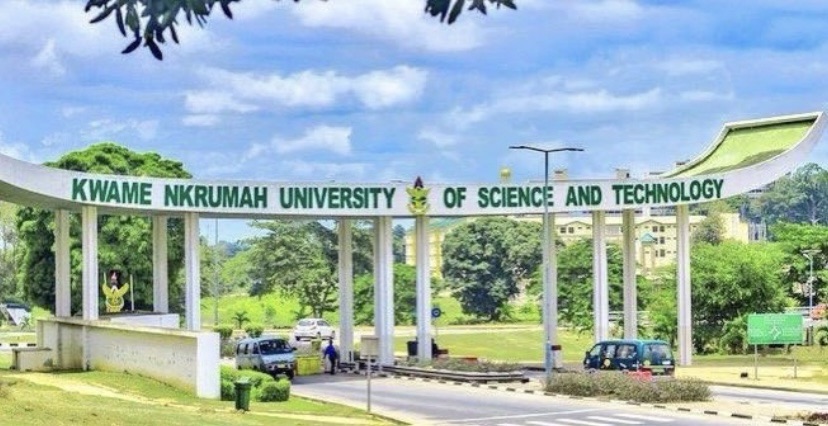
The Kwame Nkrumah University of Science and Technology (KNUST) is set to formally admit its newest cohort of students during its 75th Matriculation Ceremony, scheduled for Friday, January 30, and Saturday, January 31, 2026.
The milestone ceremony coincides with the university’s 75th anniversary and will also serve as the launch of KNUST’s Plan 2K35 strategic roadmap, an ambitious vision aimed at transitioning the institution from academic excellence to global eminence.
In line with the university’s 2025/2026 academic calendar and its digital transformation agenda, the matriculation ceremony will be held virtually, allowing newly admitted students across all campuses to participate remotely.
The ceremony will be conducted in two sessions. The main matriculation for freshmen at the Kumasi and Obuasi campuses will take place on Friday, January 30, 2026. This will be followed on Saturday, January 31, 2026, by a dedicated session for students of the Institute of Distance Learning (IDL).
University management has emphasised that participation in the matriculation ceremony is a legal requirement for full admission. To be officially recognised as members of the university, freshmen are required to join the livestream via KNUST’s official YouTube channel or social media platforms and subsequently log in to the KNUST Matriculation Portal to digitally sign and submit their matriculation oath. The portal will close promptly at 5:00 p.m. on the day of each ceremony, and students who fail to complete the process risk forfeiting their status as registered students.
The Vice-Chancellor, Professor (Mrs.) Rita Akosua Dickson, is expected to preside over the ceremony. In her preliminary New Year address, she urged the incoming students to uphold innovation, integrity, and excellence throughout their academic journey.
The 2025/2026 intake is particularly significant, as it marks the first cohort required to complete a compulsory Artificial Intelligence Foundation Course, an initiative aimed at equipping all KNUST graduates with essential skills for the modern global workforce.

