

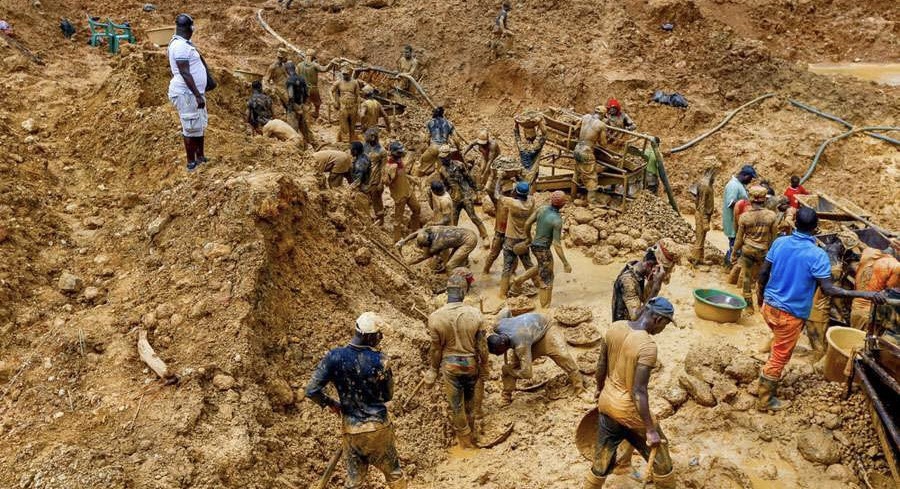
Former Minister for Environment, Science, Technology and Innovation, Professor Kwabena Frimpong-Boateng, says Ghana built a comprehensive system to tackle illegal mining within 20 months but subsequently abandoned the structures that had been put in place.
According to him, the anti-galamsey architecture was developed between April 1, 2017 and December 21, 2018, incorporating measures designed to regulate small-scale mining, monitor mining activities and protect the country’s environment.
Speaking at the Fourth Annual Colloquium of the Department of Political Science Education at the University of Education, Winneba, Prof. Frimpong-Boateng said the architecture was built around enforcement, technology, licensing, monitoring and alternative livelihoods.
He said 72 District Committees on Illegal Mining were established in January 2018, with membership drawn from traditional councils, the Minerals Commission, Environmental Protection Agency, Forestry Commission, Immigration Service, security agencies and other stakeholders.
The committees were chaired by Metropolitan, Municipal and District Chief Executives and were intended to provide a coordinated structure for tackling illegal mining at the local level.
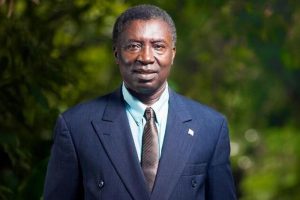
Prof. Frimpong-Boateng said the government also trained 3,000 miners at the University of Mines and Technology in Tarkwa to promote sustainable mining practices.
Every artisanal and small-scale mining concession, he said, was mapped using satellite and drone technology, verified, assigned GhanaPost addresses and signposted.
A single-window electronic licensing system, GalamStop, was also developed to integrate the Minerals Commission, the EPA, the Water Resources Commission and the assemblies, with a 90-day target for processing licences.
The system further included an interface with the International Labour Organization to address child labour, while rugged tablets were provided for field operations.
Earth-moving equipment was registered with the Driver and Vehicle Licensing Authority and electronic trackers were installed on excavators to improve monitoring. More than 140 drone pilots were also trained, while satellite earth observation technology was introduced through an arrangement involving the European Space Agency.
The former minister said additional measures included efforts to introduce mercury-free processing, develop locally appropriate mining technology and provide alternative livelihoods for affected communities.
He said Cabinet also approved reforms aimed at preventing large-scale mining companies from using small-scale mining technology, abolishing the tributer system and bulk sampling, restricting foreigners from supplying mining services to small-scale miners, and banning the fabrication, transportation and use of dredging equipment for mining in water bodies.
Prof. Frimpong-Boateng said the ban on artisanal and small-scale mining was lifted on December 21, 2018, but only under a number of conditions.
These included having a valid Taxpayer Identification Number, vetted and barcoded concessions, licensed and tagged equipment, at least one person in the company trained by the University of Mines and Technology, and commitments to reclaim mined land.
Mining companies were also required to comply with a code of conduct and undergo a six-month probation period, while Operation Vanguard was to remain in place. Illegal mining, he stressed, remained prohibited.
However, Prof. Frimpong-Boateng said the conditions and systems that formed the architecture were subsequently abandoned.
“The permission survived; the architecture did not,” he said, arguing that the country effectively retained the decision to lift the ban while allowing the mechanisms created to regulate mining to fall into disuse.
He said there was no formal decision announcing that the architecture was being abandoned.
“Things simply stopped,” he said, describing the process as a form of repeal without a formal memo, parliamentary debate or clearly identified decision-maker.
Prof. Frimpong-Boateng said the experience illustrated what he considers to be one of Ghana’s central environmental governance problems: policies and systems are often discontinued without accountability for the consequences.
He therefore proposed a National Environmental Compact, negotiated across political parties and ratified by Parliament, to prevent successive governments from simply abandoning major environmental policies.
Under his proposal, a government seeking to discontinue a commitment would have to report to Parliament, identify the decision-maker and explain the grounds for the decision.
“Abandonment in Ghana is currently free,” he said, arguing that abandoning environmental commitments should carry consequences.
He also proposed personal liability for permits issued on gazetted wetlands, watercourses, drainage systems and forest reserves, as well as a public register of seized and released mining equipment.
For Prof. Frimpong-Boateng, the failure to sustain the anti-galamsey architecture demonstrates that Ghana’s challenge is not a lack of knowledge about environmental problems, but the failure to maintain and enforce systems designed to address them.
He said the country must move beyond creating policies and structures and ensure that they survive changes in political administration.
“The exit requires someone to hold the wheel through elections,” he said in his closing remarks, urging Ghana to make abandonment expensive, make signatures personal and make environmental measurement public.

