

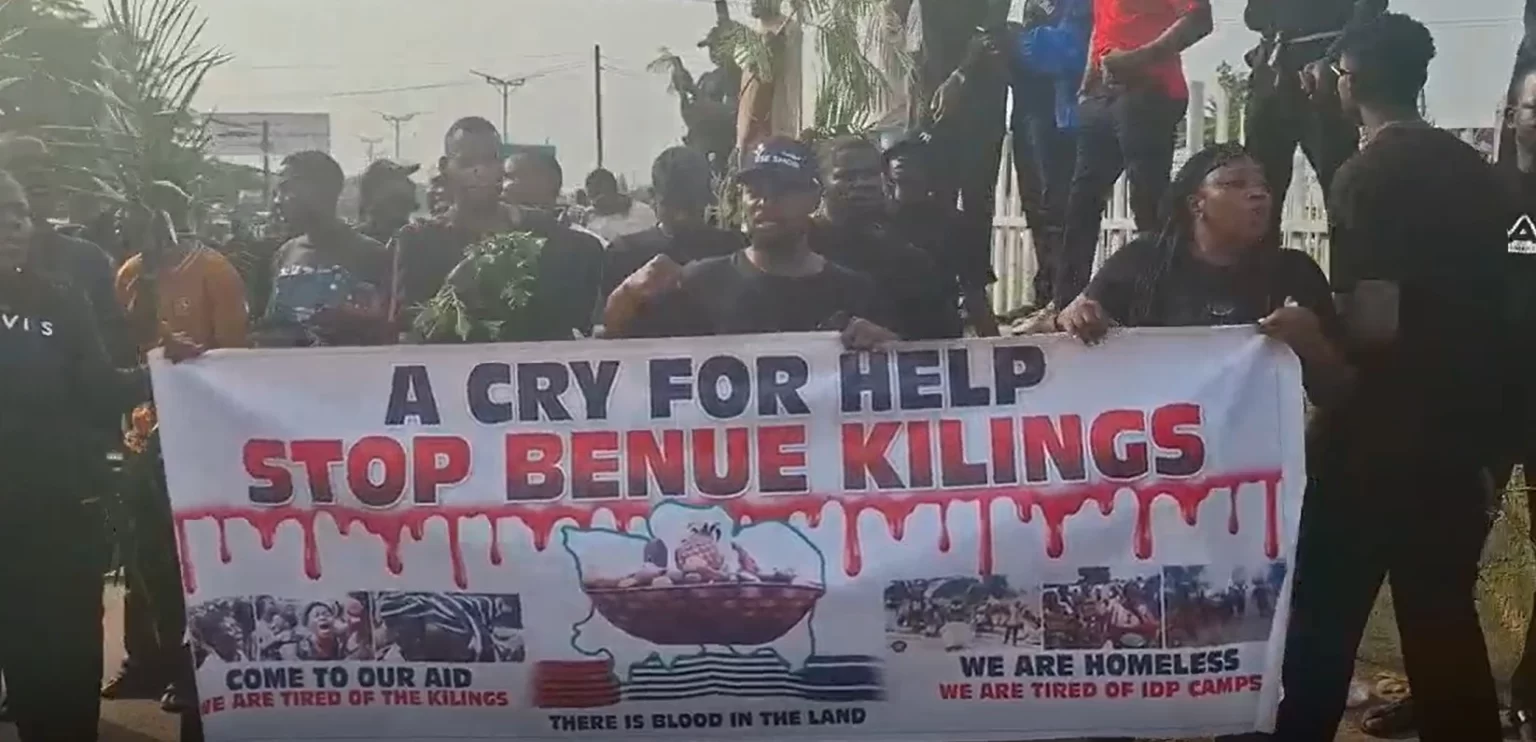
On the night of June 13th, 2025, over 150 people, many of them women and children, were killed in a brutal attack in Yelewata, a rural community in Benue State, Nigeria. Homes and harvests were burned, charred bodies found among ruined stalls, and families erased in just a few hours.
This tragic event left over 3000 injured and displaced who have been receiving aid through Nigeria’s National Emergency Management Agency in coordination with humanitarian partners, aside over 150 deaths . Some rooms in the market had bodies lay burned beyond recognition next to blackened piles of food and farm equipments.
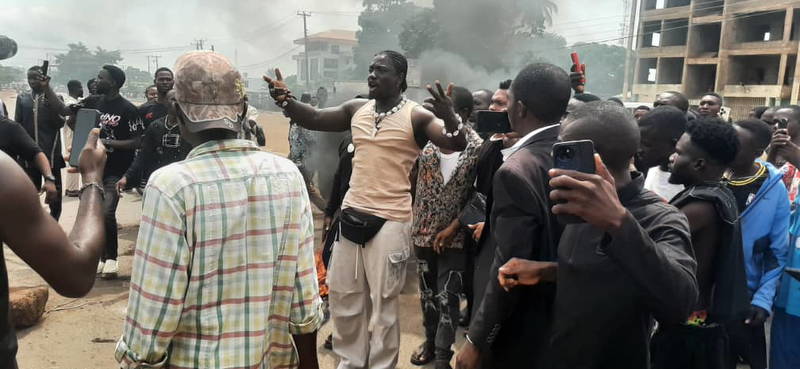
Martins Otse, popularly known as VeryDarkMan addressing protesting youths in Benue
It’s the latest in a long line of violent clashes in Nigeria’s Middle Belt. But for young Africans watching from across the continent, from Ghana to Kenya, South Africa to Senegal, it’s not enough to just mourn the loss. We must ask What can youth do in the face of this kind of violence?
Whether it’s Benue, Sudan, DR Congo, or Northern Ghana, youth across Africa are growing up in a cycle of intercommunal conflict, displacement, and silence. These events are not isolated, they’re systemic. When a part of the body bleeds, the whole body is in pain and agony. Same way, when one part of Africa bleeds, the whole youth generation is wounded.
What We Can Do
The first weapon against erasure is visibility. Let’s Speak out. Whether you have 200 or 200,000 followers, use your voice to tag local media and government officials to demand coverage and accountability. Silence protects perpetrators while Noise protects people.
After every massacre, aid flows but justice stalls.
Young people can pressure their elected officials to call out impunity, not just send condolences. Use petitions, youth-led policy forums, and letters to embassies and parliaments. Join or support organizations tracking atrocities like Global Rights Nigeria, CLEEN Foundation, and others.
Youth groups and student unions in Ghana, Nigeria, and beyond can also Fundraise for trauma counseling and safe spaces for displaced youth.
Youths can Organize online or local mental health workshops and partner with NGOs offering psychosocial care like MSF Nigeria or BDAG
The herder–farmer conflict in Nigeria is rooted in land rights, climate change, governance failures, and ethnic tensions . These are themes that are echoed across Africa.
As young Africans, we must educate ourselves on these root causes and not just the symptoms.
We must host campus debates, Twitter Spaces, and community forums linking local challenges to regional crises and collaborate with youth in affected zones. African Youths should not just “watch” Benue, but also help Benue.
This Is Not Just a Nigerian Problem. From The Volta Region to the North , from Mali to Mozambique, young people are either directly under attack, displaced by insecurity, or disillusioned by systems that won’t protect them. But here’s the truth; Youth don’t just inherit the future. We shape it.
If our generation stays silent, this cycle will continue till the end of time. But if we speak, organize, and act across borders, we can rewrite the story. We can only be assured of a tomorrow if we become the defenders of today.

